Guide to Irish Dragonflies
Here you will find detail information on Ireland's Dragonflies.
BIODIVERSITY GUIDESNATIVE IRISH SPECIES
Irish Nature Awards
2/26/20264 min read
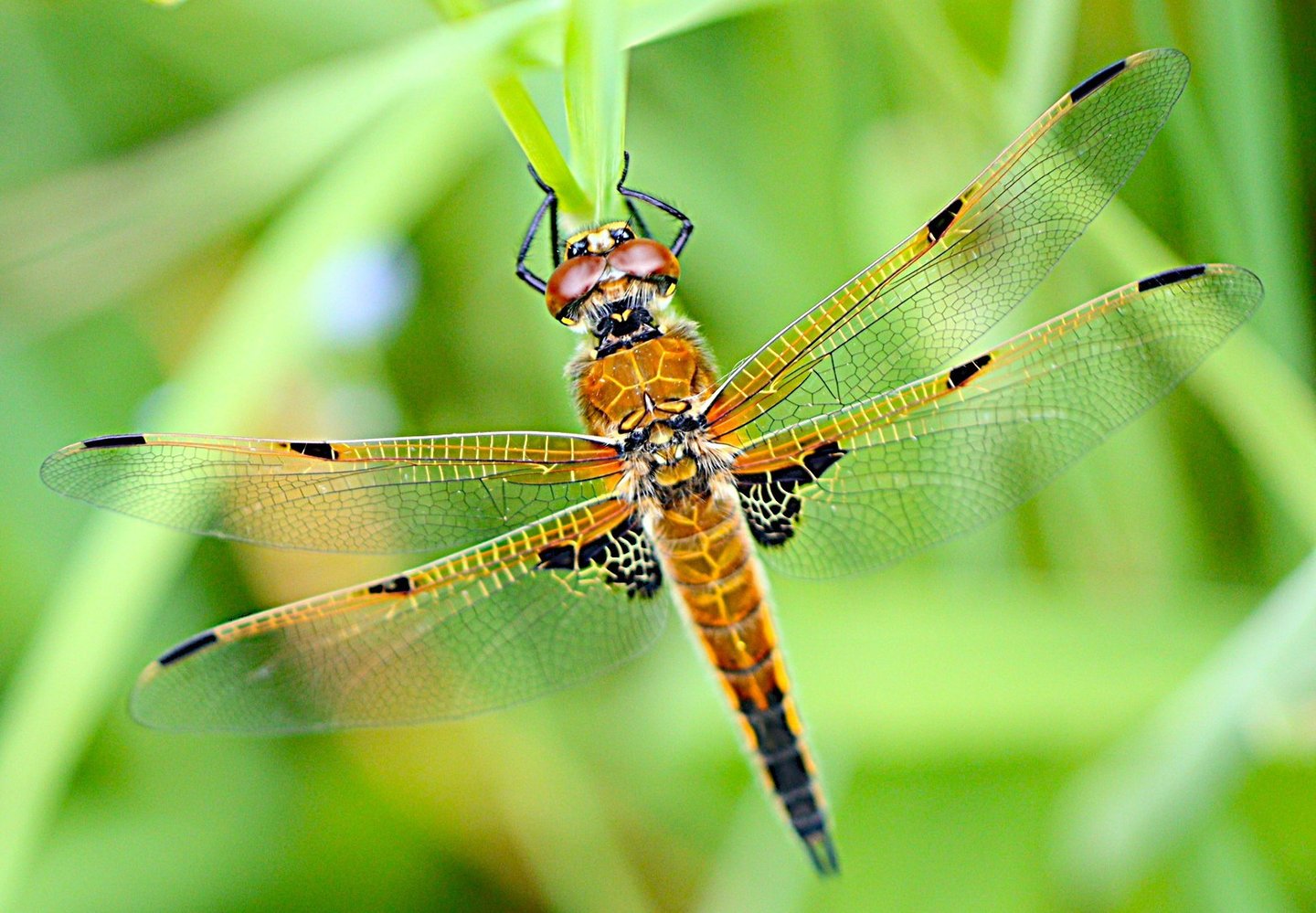
Ireland’s waterways are home to some truly spectacular aerial predators. We don’t have the huge variety found in warmer climates, but the species we do have are absolute gems—literally, in the case of the 'Emerald' Dragonflies anyway.
We have 14 different species of dragonfly that called Ireland home all year round. On top of those 14 species we have an additional 5 species of dragonfly that are vagrants. Vagrants are species that are not thought to reside in Ireland all year round but instead arrive here accidentally or via migratory routes. Due to this vagrant species are of course much rarer, and usually found at locations close to our coastlines.
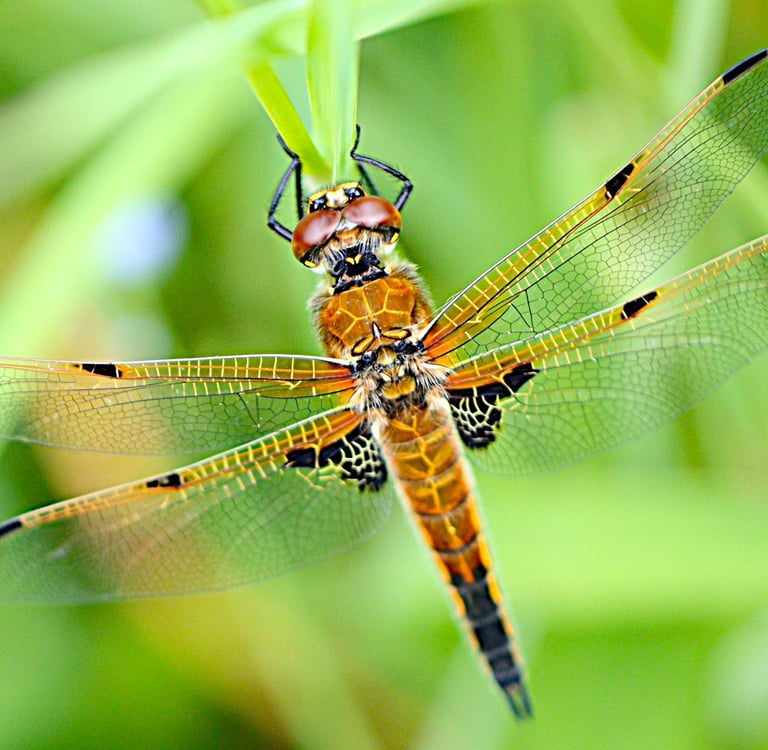
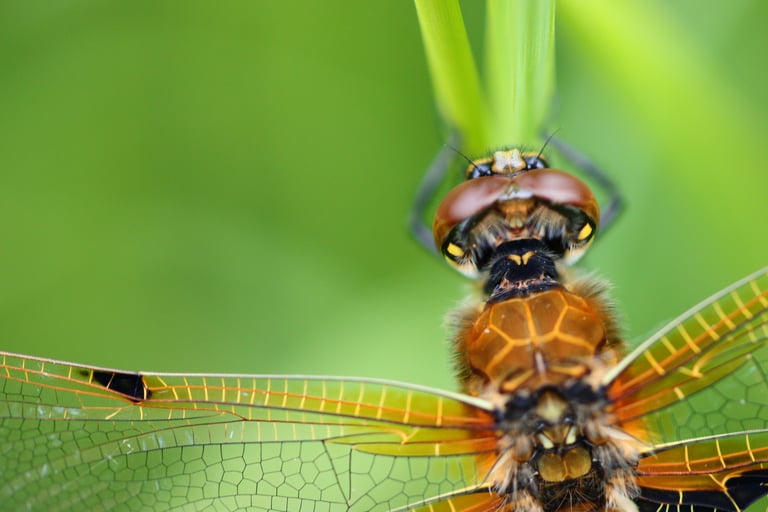
Four Spotted Chaser [Libellula quadrimaculata]
Vagrants
The 5 vagrant species known to occur are:
Vagrant emperor [Hemi] anax ephippiger
Lesser Emperor Anax parthenope
Southern Hawker Aeshna cyanea
Red-veined Darter Sympetrum fonscolombii
Yellow-winged Darter Sympetrum flaveolum
Most records in Ireland for the vagrant emperor were found in October. Most records for the lesser emperor and the red-veined darter occurred in July. For the yellow-winged darter most records of the species came in August/September. For the southern hawker most records of the species were recorded in September/October.
When to observe resident species
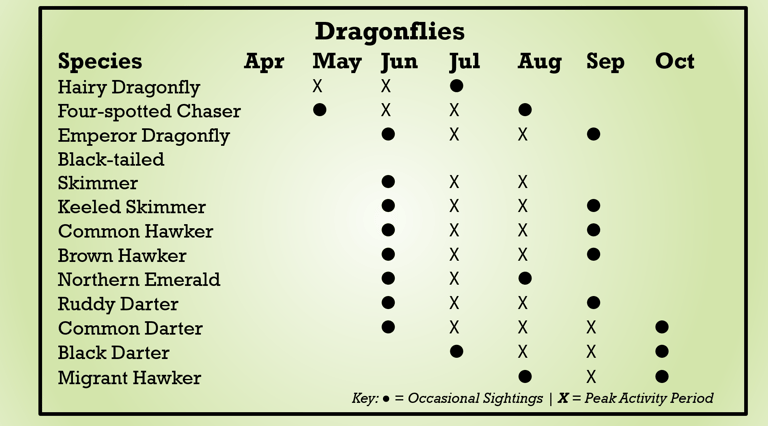
The emergence of each dragonfly species is highly dependent of weather conditions so there is variations even within species from year to year. However, you are most likely to observe the below:
Hairy Dragonfly: May - July
Four-spotted Chaser: May - August
Emperor Dragonfly: June - September
Black-tailed Skimmer: June - August
Keeled Skimmer: June - September
Common Hawker: June - September
Brown Hawker: June - September
Northern Emerald: June - August
Ruddy Darter: June - September
Common Darter: June - October
Black Darter: July - October
Migrant Hawker: August - October
Habitats, behavior, life cycle
Habitat preferences can vary between the different Irish dragonfly species. The Emperor Dragonfly is Ireland’s largest species, often seen patrolling large ponds and lakes. The Four-spotted Chaser is one of the most widespread, favoring acidic bogs and garden ponds. In contrast, the Downy Emerald is extremely rare, restricted to specific sites in Kerry and Cork. The Black Darter is a specialist of heathlands and acidic peat bogs in the west and midlands. The Hairy Dragonfly emerges early in May, preferring fens and ditches with plenty of vegetation.
Dragonflies spend the majority of their lives—up to several years—underwater as nymphs. These nymphs are apex predators in the pond, consuming water boatmen and even tadpoles. Large nymphs are capable of catching small fish, helping to regulate aquatic populations. Once they emerge as adults, they become highly efficient aerial hunters. They use large compound eyes to track prey and can fly in any direction, including backwards.
Adults catch insects like midges, flies, and moths mid-flight using their legs like a basket. This high consumption of biting insects provides a significant natural pest control service. Dragonflies are essential bioindicators of the health of Irish freshwater ecosystems. Their presence typically indicates high oxygen levels and low pollution in the water. Because they are sensitive to environmental changes, they help monitor the impacts of climate change. Species like the Migrant Hawker have become more common as Irish temperatures gradually rise. They also serve as a vital food source for Irish birds, such as the Hobby, and several species of bats. By moving between water and land, they transfer essential nutrients through the food web. Protecting local wetlands and avoiding water pollution is critical for their continued survival. These insects are fundamental to maintaining the stability and biodiversity of the Irish wild.
they spend the majority of their lives (up to five years!) underwater as nymphs, they are the first to "tell" us if a lake or river is becoming polluted. If the dragonflies disappear, it’s usually a sign that the water quality is in trouble long before we might notice it ourselves.
Dragonflies vs Damselflies
What is the difference between a dragonfly and a damselfly? ...Write a small bit maybe about when the seperate x million years ago plus add the below
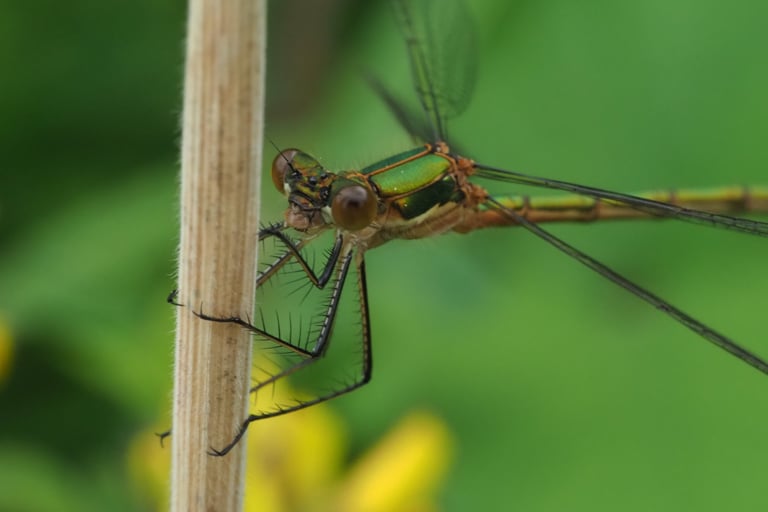
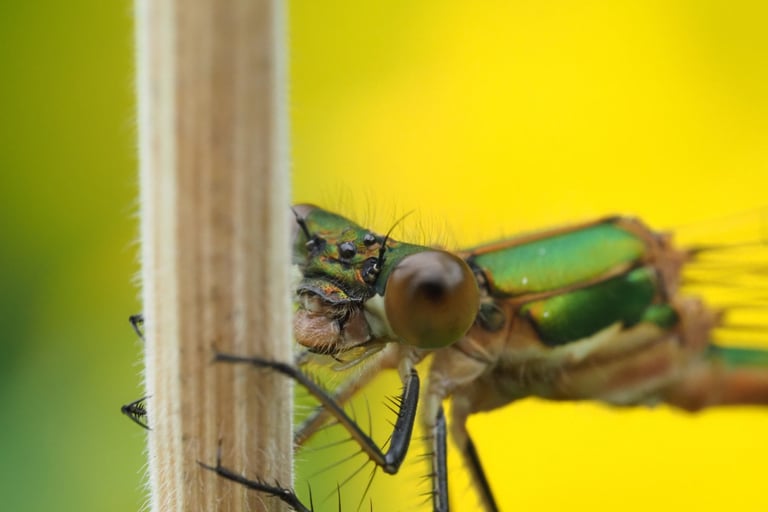
Eyes: Dragonfly eyes are massive and usually touch at the top of the head. Damselfly eyes are smaller and separated, appearing on the sides of the head.
Wings: Dragonflies have hind wings that are broader than their forewings. Damselflies have wings that are roughly the same size and shape.
Resting Posture: Dragonflies almost always rest with their wings spread out horizontally. Damselflies usually fold their wings closed over their bodies.
Body: Dragonfly bodies are generally shorter, thicker, and more robust than the needle-thin bodies of damselflies.
Dragonflies are great initial indicators of water quality. They spend the first part of their life as larvae who live and hunt in the water. In Ireland many species spend upto two years in water before they become the adult form we are familiar with. So if you see a dragon fly it means that the water body did not have severe pollution over the last two years. Alternatively, if the dragonfly disappears, then that water body could have been polluted long before.
Dragonflies control biting insect populations. As larvae in the water they actively hunt the larvae of mosquito who also live the water. Then as adults the dragonflies also hunt and eat the adult mosquitos.
Dragonflies themselves are an important food source for birds. With the constant cutting down of trees we see in Ireland, our bird populations are struggling for food sources, making dragonflies an intricate keystone of a healthy habitat.
Importance of dragonflies
hello@irishnatureawards.com
© 2026. All rights reserved.
Get in Touch
Questions about awards or categories? Check out or FAQs section