Marvels of Hoverfly Migration: Exploring Multi-Generational Journeys to Ireland
Learn about the amazing world of hoverflies and how they carry out multi-generational journies to Ireland each year.
Noel Fahy
9/11/20265 min read


Hoverflies, also known as syrphid flies, belong to the family Syrphidae and are recognized for their characteristic hovering flight, often resembling bees or wasps. These insects play a critical role in ecosystems, primarily by pollinating flowers and aiding in the control of aphid populations. Characteristically, hoverflies exhibit a wide range of colors and patterns, with some species demonstrating significant mimicry traits to evade predators.
The phenomenon of hoverfly migration is intriguing, as various species undertake remarkable journeys that can span thousands of kilometers. Unlike many insects that migrate solely for reproduction, hoverflies exhibit multi-faceted motivations that influence their migratory behavior. One of the primary reasons for migration is the search for resources, particularly nectar-rich flowers which are vital for their survival and reproduction. As temperatures drop or as resources in their native habitats diminish, hoverflies embark on long migrations to seek out more favorable conditions.
Environmental factors significantly impact hoverfly migration patterns. Changes in climate, such as shifting temperatures and altered weather patterns, can affect the availability and timing of flowering plants. In addition, perturbations in ecosystems, including habitat destruction and the use of pesticides, can also spur hoverflies to migrate in search of suitable environments. Furthermore, many hoverfly species are known to migrate in response to seasonal changes, making long-distance travel important for ensuring access to optimal breeding sites.
The ability to navigate vast distances demonstrates a sophisticated innate drive, greatly influenced by environmental cues and resource distribution. Biological motivation in hoverfly migration is, thus, a complex interplay of ecological needs and the pressures of their surroundings. As researchers continue to study these fascinating insects, understanding their migratory behaviors serves not only to appreciate their ecological significance but also to monitor environmental health and biodiversity.
Understanding Irish Hoverfly Migration
The migratory behaviors of hoverflies, particularly those journeying to Ireland, are increasingly influenced by climate change. As global temperatures rise, the alterations in weather patterns directly affect the ecosystems these insects rely upon, ultimately impacting their life cycles and migration timings. The phenology of hoverflies, which is the study of their life cycle events, is being disrupted by these climatic shifts. For instance, earlier springs caused by warmer temperatures can lead to mismatches in the timing of hoverfly emergence and the availability of their food sources, such as flowering plants.
Moreover, the variability in weather caused by climate change can also impact the habitats that hoverflies depend on for breeding and feeding. Alterations in precipitation patterns can result in droughts or floods, affecting the quality and availability of these crucial environments. As a consequence, hoverflies may find it increasingly challenging to locate suitable breeding grounds. Furthermore, the introduction of new species as a result of shifting climates could lead to competition or predation pressures that were not previously present in hoverfly habitats.
The migratory patterns of hoverflies are also becoming increasingly unpredictable. Changes in temperature can hasten or delay migration, leading to potential disorientation among these insects. Research has indicated that hoverflies may arrive in Ireland earlier or later than normal, which could adversely affect their reproductive success due to the mismatch with the seasonal availability of resources. As these conditions continue to evolve, hoverflies may face numerous challenges in their survival and adaptation strategies.
Addressing the effects of climate change on hoverfly migration patterns is crucial. Understanding these impacts not only highlights the importance of conservation efforts for hoverflies but also emphasizes the broader implications for biodiversity and ecosystem health. Proactively engaging in climate action can help mitigate some of these challenges, ensuring that hoverflies continue their remarkable multi-generational journeys to Ireland.
Impact of Climate Change on Hoverfly Migration Patterns
The Science Behind Multi-Generational Migration
The phenomenon of multi-generational migration in hoverflies has garnered significant scientific interest over recent years. Researchers are keen to understand the underlying genetic, physiological, and ecological factors that contribute to this complex migratory behavior. One critical aspect is the genetic predisposition of hoverflies to embark on long-distance flights that often span several generations. Genetic studies indicate that certain alleles may enhance traits such as navigational abilities and environmental adaptability, which are crucial for successful migration.
Moreover, ecological conditions play an essential role in shaping the migratory patterns observed in hoverfly populations. Fluctuations in climate, availability of food resources, and breeding sites directly influence the decision to migrate and the routes taken. During the migratory season, hoverflies exhibit a remarkable ability to seek out optimal habitats that will support the success of their offspring. This selective behavior ensures the continuation of their genetic lineage and contributes to the overall resilience of local ecosystems.
Tracking these intricate migration journeys poses numerous challenges for scientists. Researchers employ various techniques, including mark-recapture methods and genetic analysis, to monitor hoverfly populations throughout their migrations. The use of satellite imaging and environmental sensors has also brought new insights into the migratory routes taken by these insects, aiding in the understanding of their ecological significance in different geographical regions. Consequently, these studies not only enhance our knowledge of hoverflies but also contribute to broader ecological monitoring and conservation efforts.
In conclusion, multi-generational migration in hoverflies is a fascinating topic, intertwining genetics, ecology, and cutting-edge scientific research methodologies. By exploring these dimensions, we gain a deeper appreciation for the mechanisms that govern such incredible journeys, highlighting the importance of these insects in our ecosystems.
Key Species: Episyrphus balteatus and Eupeodes corollae
The study of hoverfly migration to Ireland reveals a fascinating array of species, among which Episyrphus balteatus and Eupeodes corollae stand out due to their unique characteristics and behaviors.
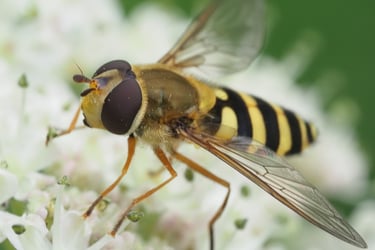
Episyrphus balteatus, commonly known as the Marmalade hoverfly, is recognized for its striking orange and black banded coloration. This species typically exhibits sexual dimorphism, with males displaying more pronounced patterns than females. Adult Marmalade hoverflies primarily feed on nectar and pollen from a variety of flowers, which supports their energy needs for migration. In addition to their diet, these hoverflies participate in significant pollination activities, thus enhancing biodiversity in the regions they visit.
Moreover, their migratory behaviors are largely influenced by climatic conditions and food availability. Each year, they embark on substantial journeys from warmer climates in southern Europe to the temperate regions of Ireland, illustrating a remarkable endurance. The migration of Episyrphus balteatus is usually triggered by environmental shifts, including temperature changes and the onset of autumn, which all play crucial roles in their navigation and survival.
On the other hand, Eupeodes corollae, also known as the Flower fly or the Common hoverfly, shares similar migratory patterns but is distinguished by its slightly smaller size and distinctive coloration, often presenting a smoother body shape. With a broad diet that includes various pollen sources, this species exhibits adaptability to diverse habitats. Eupeodes corollae thrives in gardens and open fields, making it a common sight in Irish flora during migration.
Both species exhibit remarkable migratory behaviors, responding dynamically to ecological cues in their environments. This interplay of physical traits, behavior, and environmental factors underscores the importance of these hoverfly species not only as migratory insects but also as integral components of the ecosystems they inhabit.




Written by Noel Fahy
Noel Fahy is the Head of the Irish Nature Awards, a freelance ecologist, and an experienced Zoology graduate from the University of Galway. Read Noel's Full Bio & Background
hello@irishnatureawards.com
© 2026. All rights reserved.
Get in Touch
Questions about awards or categories? Check out or FAQs section